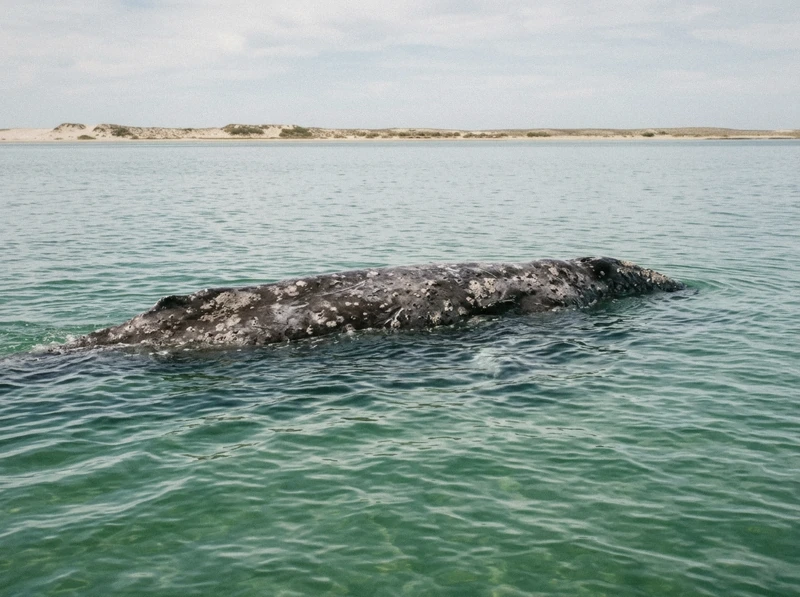
Which Baja Whale Watching Tour Is Right for You?
| Tour | Length | Leaves from | Best for | Rating | From | |
|---|---|---|---|---|---|---|
| Full Day Gray Whale Watching Experience | 8 hrs | La Paz | First gray whale day from La Paz | 4.7 | $193 | Check → |
| Gray Whale Watching Tour with Marine Biologist and Small Group | 8 hrs | La Paz | Photographers, more time with the whales | 5 | $347 | Check → |
| Gray Whales Watching in Magdalena Bay | 8-9 hrs | La Paz | Small boat to Puerto Chale with a biologist | 5 | $237 | Check → |
| Gray Whale Watching Expedition at Magdalena Bay | 2 hrs | Puerto Chale | Road trippers with their own car | 5 | $165 | Check → |
| Gray Whale Watching Tour at Lopez Mateos | 8 hrs | Loreto | Travellers based in Loreto | 4.8 | $185 | Check → |
| Blue Whale Watching in Loreto | 5 hrs | Loreto | Blue whales in the Sea of Cortez | 5 | $176 | Check → |
What Is the Best Month for Whale Watching in Baja?
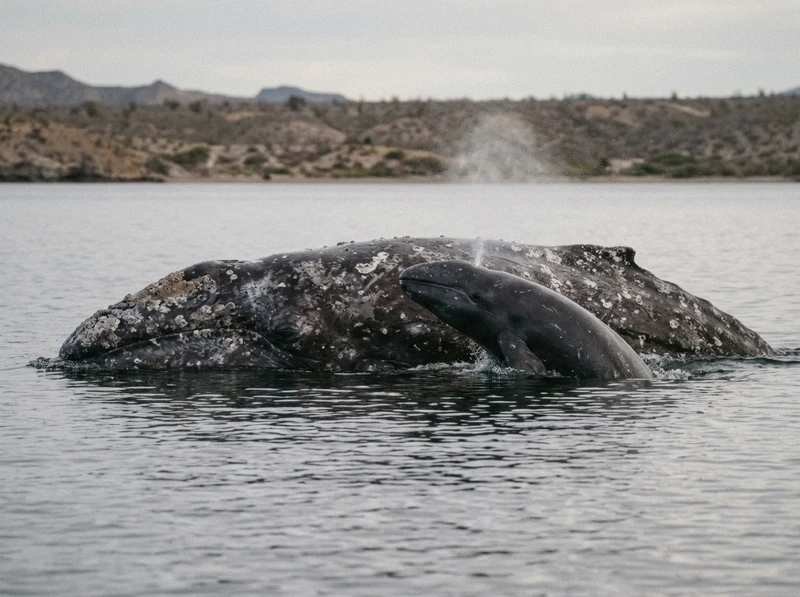
February and March are the best months for whale watching in Baja. The official season in the El Vizcaíno lagoons runs from December 15 to April 30, and in the 2025-2026 season CONANP counted the peak in mid-February, with 528 gray whales in Ojo de Liebre and 113 in San Ignacio. February and March are also when mother-calf pairs are most common and the calves grow curious about boats.
Blue whales in the Sea of Cortez overlap well: the highest numbers off Loreto come from February to April. A trip in late February or early March can cover both.
Source: CONANP, Baja Expeditions, Oceanic Society.
Where Is the Best Whale Watching in Baja?
San Ignacio Lagoon is the best place in Baja for close gray whale encounters, Ojo de Liebre holds the most whales, and Magdalena Bay is the only lagoon you can reach on a day trip. Loreto is the place for blue whales. Which one is best for you depends on how many days you have.
The three gray whale lagoons and Loreto compared on what decides the trip: how you get there, how you book and what the encounter is like, from CONANP figures and the guides that rank for this search.
| Where | Whales | Base town | How to book | Encounter |
|---|---|---|---|---|
| Laguna Ojo de Liebre | Gray, most numerous (528 at the 2026 peak) | Guerrero Negro | Local licensed cooperatives, short boat ride | Many whales, friendly encounters less frequent |
| Laguna San Ignacio | Gray (113 at the 2026 peak) | San Ignacio, about 1 hr from the docks | Multi-day camps, 2+ days recommended | Best for whales that approach and stay |
| Magdalena Bay (Puerto Chale, López Mateos) | Gray | La Paz or Loreto | Day trips on this page | Up to an hour in the panga to reach the whales |
| Loreto Bay National Park | Blue, fin, humpback | Loreto | Half-day panga trip | Open water, whales watched from a distance |
Source: CONANP, Oceanic Society, Moon Travel Guides.
Baja's Lagoons or Cabo San Lucas: Which Whale Trip Is It?
They are different trips. In Cabo San Lucas you board at the marina for 2-3 hours and watch humpback whales breach off Land's End from a distance. In the Baja lagoons you travel half a day to the Pacific side, board a small panga and gray whales come to the boat, often close enough to touch.
If you are staying in Los Cabos, do the humpbacks there and make the lagoons a separate overnight in La Paz or Loreto. Our Cabo San Lucas whale watching tours page compares the marina boats.
What changes between a Cabo humpback trip and a Baja gray whale lagoon day, using the tours on both pages.
| Cabo San Lucas | Baja lagoons | |
|---|---|---|
| Whale | Humpback | Gray, mothers with calves |
| Encounter | Breaching and tail slaps at a distance | Whales approach the panga, sometimes touchable |
| Season | Mid-December to mid-April | December 15 to April 30, peak February–March |
| Time needed | 2-3 hours from the marina | Full day from La Paz or Loreto, or a multi-day camp |
| Price on our pages | From $99 | From $165 |
Source: Oceanic Society, CONANP.
What Rules Do Baja Whale Watching Boats Follow?
Every whale watching boat in Mexico follows the federal standard NOM-131-SEMARNAT-2010, and the lagoon operators need a federal authorization to work at all. The rules explain why your trip feels unhurried: the boats are slow, small and few.
- Only small boats under 10 metres may watch whales where the water is less than 10 metres deep, which covers the lagoons.
- No more than 4 boats may stay around the same whale or group.
- A boat may stay a maximum of 30 minutes with one whale or group.
- Speed stays under 5 knots in the observation areas and drops to 2 knots inside the observation zone.
- Chasing, harassing or forcing physical contact with a whale is banned, as are feeding whales, kayaks and jet skis.
- Licensed boats show an official badge. In El Vizcaíno, CONANP issued 56 authorizations for the 2025-2026 season.
Source: NOM-131-SEMARNAT-2010 (DOF), CONANP.
What Is the Best Time to See Whales in the Sea of Cortez?
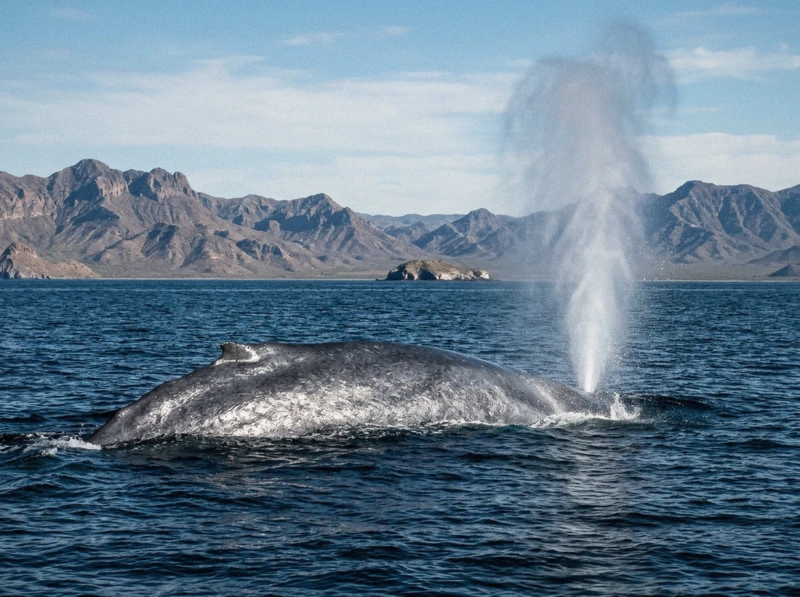
February to April is the best time to see blue whales in the Sea of Cortez, and the wider whale season there runs from December to April. Loreto Bay National Park is the base: pangas carrying 6-8 people leave the Loreto malecón for 5-hour trips among the park's islands, with the Sierra de la Giganta behind.
Humpbacks, fin whales and dolphins share the same waters in winter. Unlike the lagoon grays, blue whales do not come to the boat, so expect to watch them surface and blow from a respectful distance.
Source: Baja Expeditions, Oceanic Society.
Whale Species & Best Months in Baja California
| Species | January–March | April–June | July–September | October–December | Likelihood |
|---|---|---|---|---|---|
| Gray Whale | Peak | April | — | From Dec 15 | Very high mid-January to March |
| Blue Whale | Feb–Mar | April | — | — | Loreto Bay, February–April |
| Humpback Whale | Present | — | — | Arriving | Sea of Cortez and Cabo, winter |
| Fin Whale | Present | Present | — | — | Possible on Loreto trips |
| Bottlenose & Common Dolphins | Common | Common | Common | Common | Frequent bonus sighting |
What to Expect on the Day
Early start and the drive west
Full days from La Paz and Loreto leave early for the drive across the peninsula to Magdalena Bay on the Pacific side. Puerto Chale is the lagoon port used from La Paz, Puerto Adolfo López Mateos the one used from Loreto.
Into the panga
Licensed local pangas, open boats under 10 metres, take you into the lagoon. Inside the observation zone the boat slows to 2 knots, and no more than four boats may stay with the same whale or group.
The encounter
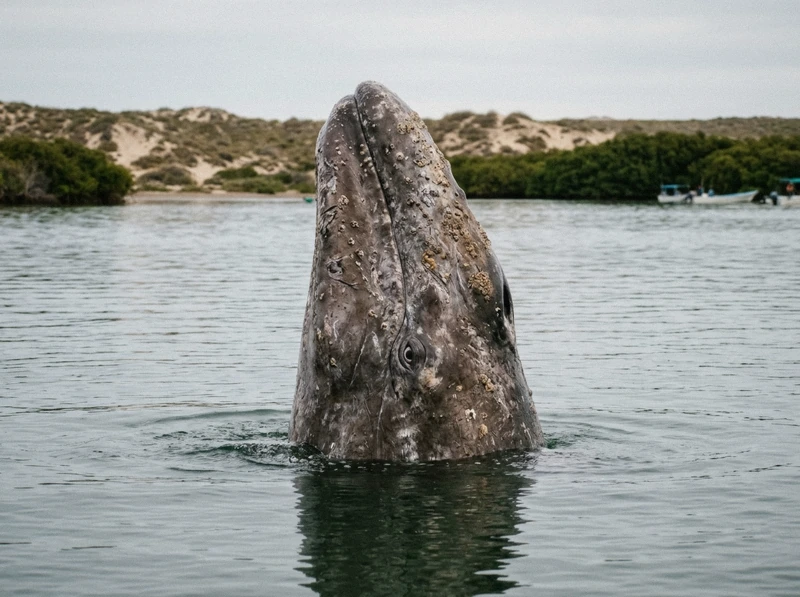
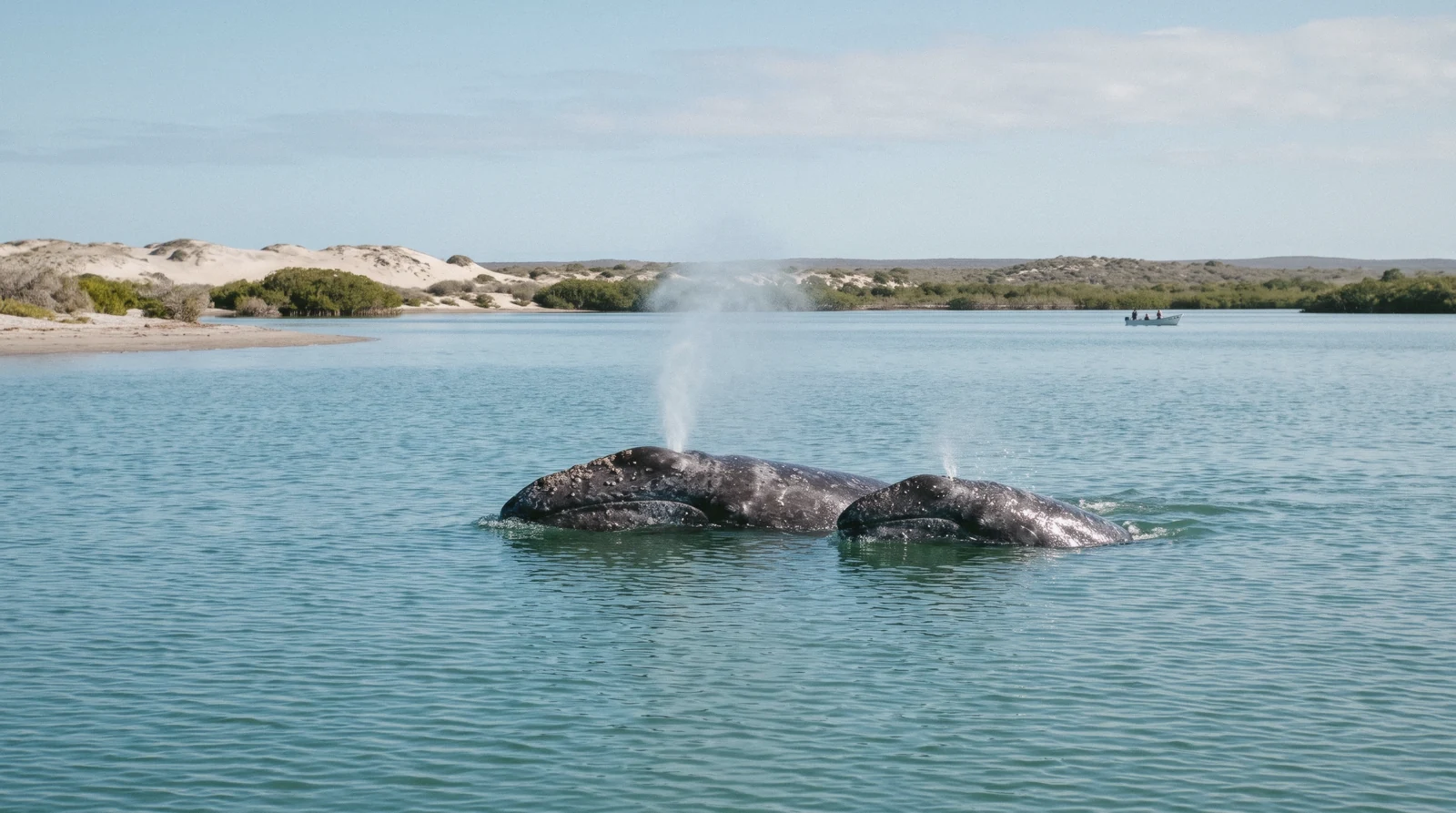
Mothers and calves surface around the boat. Some whales come right up to the hull and stay, and passengers often touch them. Crews may not chase, block or force contact: the whale decides how close it comes.
Time limit and return
Each boat may spend a maximum of 30 minutes with one whale or group before moving on, so a trip usually brings several encounters. Back on land, most day trips stop for a meal before the drive home.
Watch: Humpback Whales in Baja California
Up-Close and Personal with Gray Whales | Baja California | Lindblad Expeditions-National Geographic
What to Bring and What to Leave at Home
✓ Bring
- A windbreaker and a warm layer: lagoon mornings are cool and the pangas are open
- A waterproof jacket or poncho: whale blows and spray reach the boat
- A dry bag for your phone and camera
- A wide-brim hat and sunglasses with a strap
- Reef-safe sunscreen and lip balm
- Motion-sickness tablets for the blue whale trip in open water
- Pesos in cash for tips and the roadside stops
✗ Leave at home
- Kayaks, paddleboards and jet skis: the rules ban them in the observation areas
- Food for the whales: feeding is banned
Where Tours Depart From
| Port / Area | Details |
|---|---|
| La Paz (t1, t2, t3) | Day trips start on the La Paz waterfront: Paseo Álvaro Obregón at Agustín Arreola for t1, in front of The Hook La Paz for t3, hotel pickup for t2. La Paz airport is about 2 hours by road from Los Cabos airport. |
| Puerto Chale, Magdalena Bay (t4) | A fishing village on the southern end of Magdalena Bay. Meet at the checkpoint tent at the entrance to the village at 8:40am. Drive yourself, there is no transport on this trip. |
| Loreto (t5, t6) | The López Mateos day picks up at Loreto hotels. The blue whale trip meets at the Loreto Lighthouse on Paseo López Mateos. Loreto airport is about 10 minutes from town. |
| Guerrero Negro and San Ignacio (no day trips listed) | Ojo de Liebre is reached from Guerrero Negro, on Highway 1 near the state line. San Ignacio Lagoon is about an hour's drive from San Ignacio town. Both are run by CONANP-licensed local cooperatives and multi-day camps. |
How to Choose an Ethical Tour
What ethical operators do
- Book licensed operators: lagoon boats must carry an official authorization badge
- Let the whale come to you and keep hands still unless it chooses to stay at the hull
- Choose trips with a marine biologist who explains behaviour instead of chasing
- Accept the 30-minute limit per whale, it protects nursing mothers
Red flags to avoid
- Pangas chasing whales or cutting between a mother and calf
- More than four boats crowding one whale
- Kayaks or jet skis near the whales, both banned