Types of Whale Watching in Santa Barbara
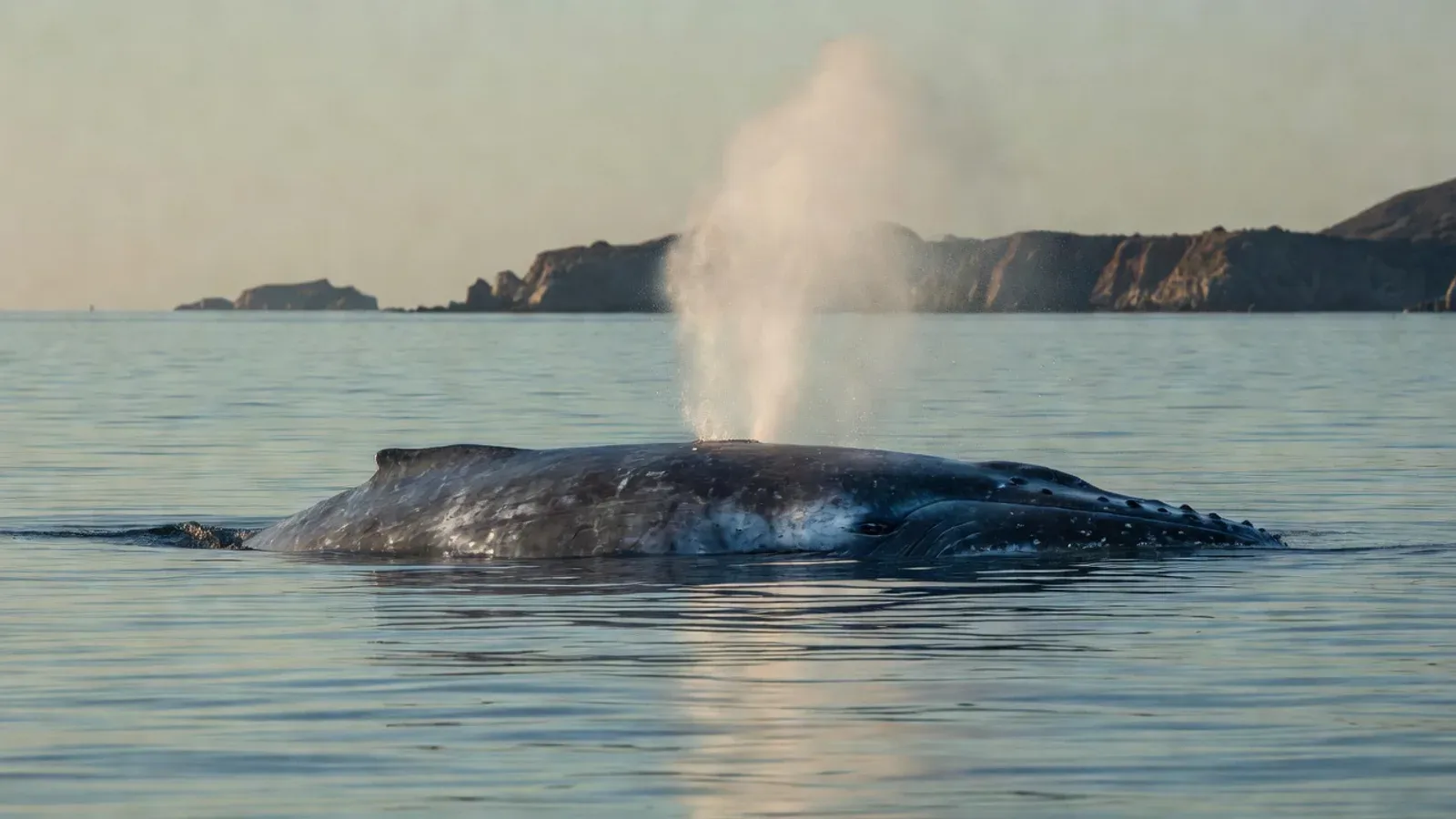
Whale Species & Best Months in Santa Barbara
| Species | January–March | April–June | July–September | October–December | Likelihood |
|---|---|---|---|---|---|
| Blue Whale | — | Arriving | Peak | Departing | ~80% Jul–Sep |
| Gray Whale | Peak | Departing | — | Arriving | ~90% Dec–Apr |
| Humpback Whale | Rare | Present | Common | Present | ~55% |
| Fin Whale | Present | Present | Common | Present | ~25% |
| Common Dolphin | Common | Common | Common | Common | Very High |
What to Expect on the Day
Depart from Stearns Wharf
Condor Express departs from Sea Landing at the Santa Barbara Harbor, adjacent to Stearns Wharf — one of California's most iconic piers. The harbor is walkable from downtown Santa Barbara and State Street. Free 90-minute parking in the harbor lot; longer paid parking available nearby.
Enter the Santa Barbara Channel
The boat heads south into the channel between the mainland and the Channel Islands. The east-west orientation of the channel keeps conditions calmer than most California coast departures. The Channel Islands (Anacapa, Santa Cruz) come into view as you head offshore.
Blue whale encounter (June–October)
Blue whales can exceed 100 feet in length and weigh 200 tons — the largest animals ever to live on Earth. The blow is a column of white vapour up to 30 feet high, visible from miles away. Even at the legal 100-yard distance, the whale dwarfs the boat. The channel's krill blooms hold multiple blue whales feeding simultaneously — sightings of 5–10 individuals in one outing are possible in peak season.
Gray whale migration (December–April)
Gray whales travel through the channel on their 10,000-mile migration between Alaska and Baja California. The channel's width means they pass close to boats. Mothers with calves are common in late February and March on the northbound return migration.
Channel Islands backdrop
The Channel Islands rim the southern horizon throughout the trip — some of the most dramatic scenery of any whale watching departure in California. On clear days you can see Anacapa, Santa Cruz, and Santa Rosa islands. The islands are home to California sea lions, elephant seals, and one of the largest seabird colonies in the western United States.
Watch: Humpback Whales in Santa Barbara
Best Whale Watching in Santa Barbara — Highlights
What to Bring — and What to Leave at Home
✓ Bring
- Warm layers — the channel is cooler than Santa Barbara shore
- Windproof jacket
- Sunscreen and sunglasses
- Binoculars
- Camera with telephoto lens
- Motion sickness medication if prone
✗ Leave at home
- Light summer clothing only — channel air is significantly cooler than town
- Pets
Where Tours Depart From
| Port / Area | Details |
|---|---|
| Santa Barbara Harbor — Sea Landing | 301 W Cabrillo Blvd, Santa Barbara. Condor Express departs from Sea Landing at the harbor mouth. Walk-in distance from downtown. 90-minute free parking in the harbor lot; longer stays in the paid lot on Harbor Way. |
How to Choose an Ethical Tour
What ethical operators do
- Maintain 100-yard minimum from blue and gray whales (NOAA regulations)
- Book with operators who carry certified naturalists on every trip
- Support Channel Islands National Marine Sanctuary by choosing permitted operators
- Use Whale Alert app to report sightings and help researchers track populations
Red flags to avoid
- Operators without NOAA whale watch permits
- Approaching blue whales within 100 yards — their feeding dives can be unpredictable
- Using drones near marine mammals without NOAA permits