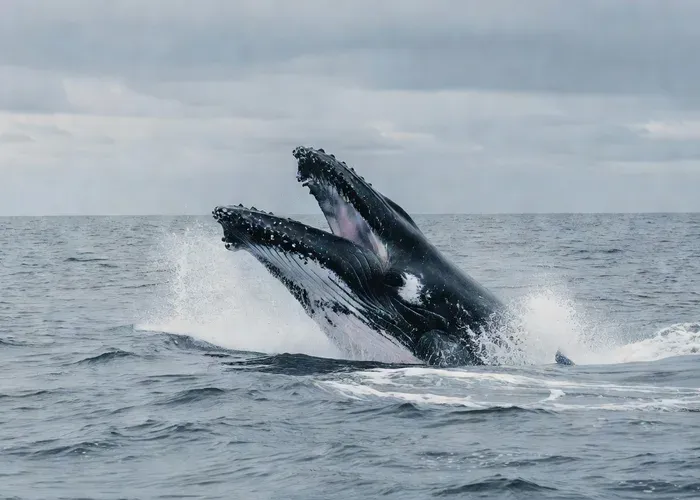
Types of Whale Watching in San Francisco
Where can you see whales in San Francisco and the Bay Area?
From a boat, the whales are outside the Golden Gate in the Gulf of the Farallones. From land, the best Bay Area whale watching spots are the Point Reyes Lighthouse, Chimney Rock and Tomales Point in Point Reyes National Seashore, and Pigeon Point Light Station south of Half Moon Bay.
The main places to see whales around San Francisco, by boat and from shore, with what each one is best for:
| Spot | How you watch | Best for | When |
|---|---|---|---|
| Fisherman's Wharf, San Francisco | Boat, about 4 hours, under the Golden Gate | Humpbacks | Spring to fall |
| Point Reyes Lighthouse and Chimney Rock | Shore, headland 10 miles out into the Pacific | Gray whales | Winter and spring migration |
| Pigeon Point Light Station | Shore, deck with a 300-degree view, docents Friday to Monday from March | Gray whales | Peak in April, through May |
| Monterey, Old Fisherman's Wharf | Boat, 2-3 hours, 2 hours south | Humpbacks, blue and gray whales | Year-round |
Shore watching works best from high ground on a day with little wind, when spouts stand out against the water. Bring binoculars: gray whale blows are short and heart-shaped, humpback blows taller and straighter.
Source: NPS, Point Reyes whale watching, Coastside State Parks, San Francisco Whale Tours.
When is whale watching season in San Francisco?
Whale watching season in San Francisco peaks from July to September for humpbacks, while gray whales pass the Bay Area twice a year: heading south from about October and north again in spring.
The southbound gray whale migration from the Bering Sea to Baja California begins in October and takes two to three months, and the northbound return starts in spring and lasts about as long. Some gray whales also stay off northern California through the summer. Humpbacks, 40 to 50 feet long, are the whales most San Francisco trips find from spring to fall.
- Spring (March to May): northbound gray whales, best from shore at Pigeon Point in April, humpbacks start arriving
- Summer and early fall (June to October): humpback feeding season outside the Golden Gate, blue whales some years
- Winter (December to February): southbound gray whales, Point Reyes shore watching, few Golden Gate departures
Source: San Francisco Whale Tours, migration seasons, Coastside State Parks, NPS Point Reyes.
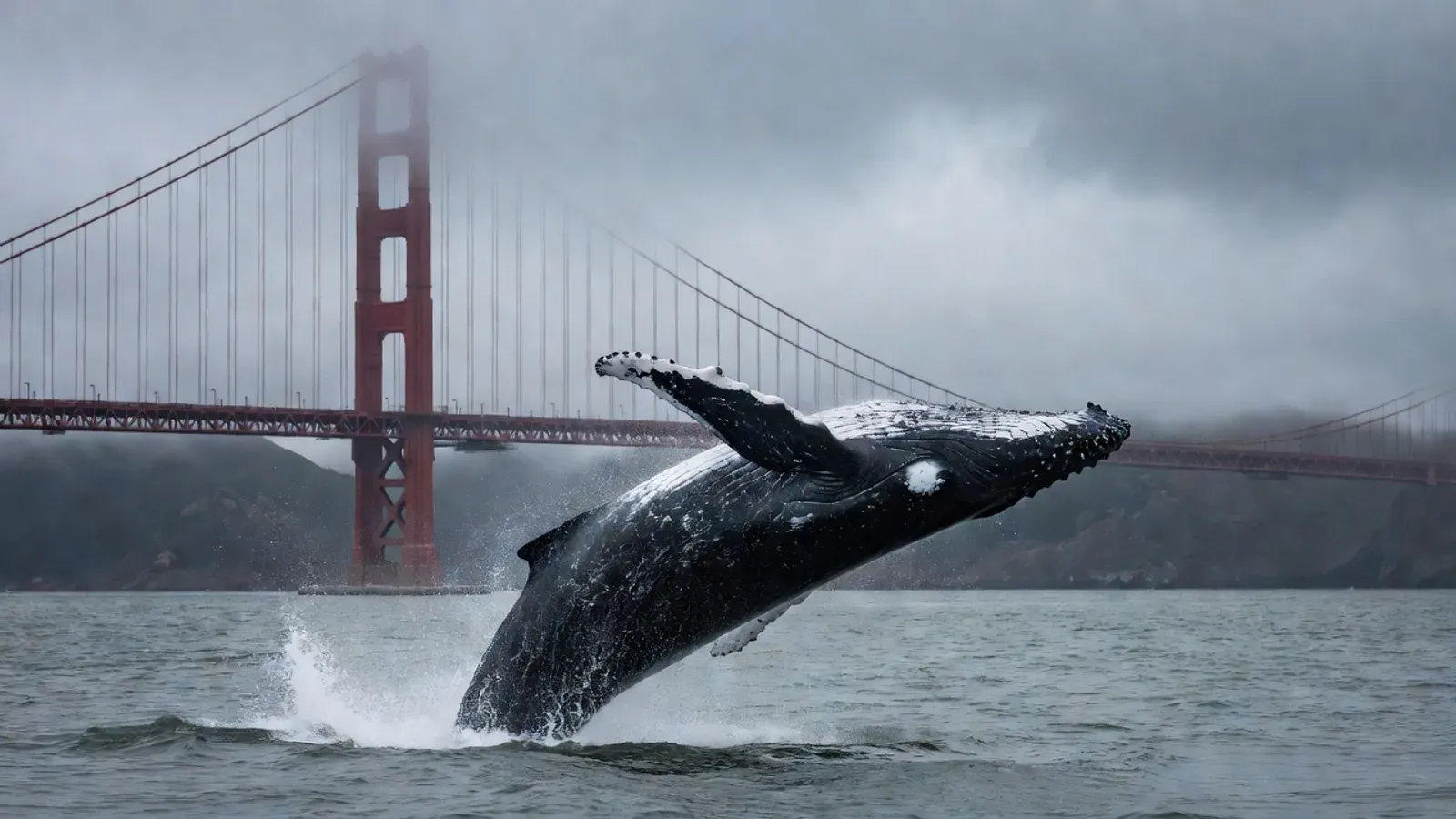
Whale Species & Best Months in San Francisco
| Species | January–March | April–June | July–September | October–December | Likelihood |
|---|---|---|---|---|---|
| Humpback Whale | — | Arriving | Peak | Departing | ~90% Jun–Oct |
| Blue Whale | — | Rare | Present | Rare | ~30% Jul–Sep |
| Orca | Rare | Rare | Rare | Rare | ~10% |
| Gray Whale | Migrating | Migrating | — | Southbound | ~40% Dec–Apr |
| Dall's Porpoise | Common | Common | Common | Common | Very High |
What to Expect on the Day
Meet at Fisherman's Wharf
In season, San Francisco whale cruises leave from the Pier 39 / Fisherman's Wharf area. Arrive 20-30 minutes early. Parking is paid, and BART and Muni serve the area.
Pass under the Golden Gate Bridge
Boats head north through the bay and pass under or alongside the Golden Gate Bridge, one of the most dramatic departures in world whale watching. The bridge towers rise 746 feet above the water.
Into the Gulf of the Farallones
Beyond the Golden Gate the Pacific opens up. Cold upwellings from the California Current create the nutrient-rich conditions that sustain the largest concentrations of humpback whales on the California coast.
Humpback whale encounter
Humpbacks are the star species June–October. They feed actively near the surface, lunge feeding, bubble netting, and occasionally breaching. Naturalists identify individuals by their unique fluke markings.
Return through the Golden Gate
The return through the Golden Gate at golden hour on a clear evening is one of the great wildlife tour finales in America. Harbour seals, California sea lions, and seabirds accompany the boat back into the bay.
Watch: Humpback Whales in San Francisco
Whale Watching Tour in San Francisco
What to Bring and What to Leave at Home
✓ Bring
- Warm waterproof jacket (SF bay is cold and windy year-round)
- Fleece mid-layer
- Beanie or hat
- Binoculars
- Camera with telephoto lens
- Motion sickness medication (open ocean can be rough)
✗ Leave at home
- Light summer clothing only: SF is cold on the water
- Pets
Where Tours Depart From
| Port / Area | Details |
|---|---|
| Fisherman's Wharf, San Francisco (season only) | In season, whale cruises leave from the Pier 39 / Fisherman's Wharf area. BART: Embarcadero Station (15-min walk). The Muni F-line stops at the Wharf. |
| Old Fisherman's Wharf, Monterey | The Monterey tour checks in at the yellow Princess Monterey Whale Watching building at the end of the wharf, at least 30 minutes before departure. Park at the Waterfront Lot (245 Washington St) or the Heritage Harbor garage (100 Pacific St). |
How to Choose an Ethical Tour
What ethical operators do
- Maintain 100-yard minimum from humpback whales (NOAA guidelines)
- Support operators with Gulf of the Farallones sanctuary permits
- Observe California sea lions at Pier 39 from a distance, do not feed
- Choose tours with certified naturalists on board
Red flags to avoid
- Operators without National Marine Sanctuary permits
- Approaching whales within 100 yards
- Using underwater sound devices near cetaceans