

Which Okinawa Whale Watching Tour Is Right for You?
| Tour | Duration | Group size | Best for | Rating | From | |
|---|---|---|---|---|---|---|
| Full-Day Kerama Islands Snorkeling | Full day (~7 hrs) | Small group | First-timers, non-divers, best value | 4.5 | $81 | Check → |
| Whale Shark Snorkeling at Yomitan | Half day | Small group | Non-divers wanting a whale shark encounter | 4.9 | $188 | Check → |
| Kerama Islands Diving & Snorkeling | Full day (~7 hrs) | Small group | Certified divers or try-dive beginners | 4.5 | $98 | Check → |
| Whale Shark Snorkeling with Photos & Videos | 2 hrs | Small group | Whale shark encounter with a photo record at the lowest price | 4.8 | $125 | Check → |
How much is whale watching in Okinawa?
Whale watching in Okinawa costs ¥5,000 to ¥7,700 (about $31 to $48) for an adult on a humpback boat in season: ¥5,000-6,500 from Naha, ¥5,500-7,000 from Chatan and ¥7,700 with the Zamami Whale Watching Association in the Kerama Islands. Children aged 6-12 pay less: ¥3,850 on Zamami boats and ¥4,000-5,500 at Marine Club Berry Naha, where hotel pickup is included.
Adult prices for Okinawa whale watching and the other whale trips, from operators' own sites and the tours on this page. Yen are converted at 1 USD = 159.5 JPY.
| Trip | Adult price | Length | What you should know |
|---|---|---|---|
| Marine Club Berry Naha (Naha) | ¥5,000-6,500 (about $31-$41) | about 4 hours | hotel pickup in Naha, full refund if no whale from 1 February to 31 March |
| Cerulean Blue (Naha) | ¥5,000-6,500 (about $31-$41) | 3 hours | free round-trip transfers from Naha |
| Cerulean Blue (Chatan) | ¥5,500-7,000 (about $34-$44) | 3 hours | central west coast departure |
| Zamami Whale Watching Association (JNTO) | ¥7,700 (about $48), child ¥3,850 | 1-2 hours | boats leave from Zamami Port in the Kerama Islands |
| Diving Guma swim with humpbacks | ¥30,000 (about $188) | full day | certified divers or freedivers only, no sighting guarantee |
| Kerama Islands snorkeling day | from $81 | about 7 hours | whale watching added from January 12 through March |
| Whale shark snorkel with photos | from $125 | about 2 hours | whale sharks in a netted site off Yomitan, all year |
Source: Marine Club Berry Naha, Cerulean Blue, Zamami Whale Watching Association (JNTO), Diving Guma.
When is whale watching season in Okinawa?
Okinawa whale watching season runs from late December to early April, when humpbacks come to the warm water around the Kerama Islands to mate and raise calves. January to March is the busiest stretch of the season. Marine Club Berry Naha sails from 19 December to 31 March, and Diving Guma runs its swim trips from mid-January to late March.
Winter wind makes the sea rough on some days, and boats cancel in strong wind or high waves, so leave a spare day in your plan.
Source: Visit Okinawa Japan, Cerulean Blue, Marine Club Berry Naha, Diving Guma.
Should you go whale watching from Naha or from Zamami?
Go from Naha if you want hotel pickup and one easy half day, and from Zamami if you will stay on the Kerama Islands. Naha boats run 3-4 hours, leave at 8:30 AM and 1:30 PM with Marine Club Berry Naha and head west toward the Kerama Islands. Zamami Whale Watching Association boats leave from Zamami Port itself for 1-2 hours, morning or afternoon, so you spend less time getting to the whales but must first take the ferry from Naha's Tomari Port.
Source: Marine Club Berry Naha, Zamami Whale Watching Association (JNTO), Visit Okinawa Japan.
Do Okinawa whale watching tours refund you if no whales are seen?
Some do. Marine Club Berry Naha gives a full refund if no whale is spotted on trips from 1 February to 31 March, and a re-trial voucher for another day earlier in the season. The refund does not apply if anyone on board, crew included, sees a whale, a dolphin or a blow. Diving Guma's swim tour gives no refund if no whales are found. Read the policy on the listing before you book.
Source: Marine Club Berry Naha, Diving Guma.
Can you swim with humpback whales in Okinawa?
Yes, but only on a few specialist trips and only if you are an experienced swimmer. Diving Guma runs a humpback swim tour for ¥30,000 (about $188) from mid-January to late March, open to certified scuba divers or freedivers under 60, with no sighting guarantee. Freediving down to the whales and chasing them are banned on the trip. The regular whale watching boats from Naha and Zamami do not put anyone in the water.
Source: Diving Guma.
When is whale shark season in Okinawa?
Whale shark snorkeling in Okinawa runs all year, because the sharks live in a netted site off Yomitan on the west coast, a 10-minute boat ride from the port, not in the open sea. Operators list summer and winter dates alike, with morning and afternoon slots. For a dry view, the Kuroshio Sea tank at the Okinawa Churaumi Aquarium holds whale sharks all year.
These are not wild encounters. If you want wild whales, come from January to March for the humpbacks. Snorkel trips at the whale shark site are usually for ages 6-59, and the boat stays outside the net for some programs.
Source: Traveloka whale shark listing, MCCS Okinawa, Okinawa Churaumi Aquarium.

Whale Species & Best Months in Okinawa
| Species | January–March | April–June | July–September | October–December | Likelihood |
|---|---|---|---|---|---|
| Humpback Whale | Peak | — | — | — | Late December to early April |
| Whale Shark | Present | Present | Present | Present | All year at the Yomitan net site |
| Sea Turtle (Green / Hawksbill) | Common | Common | Common | Common | Year-round in Kerama |
| Manta Ray | Occasional | Present | Common | Present | April–October (Kerama) |
| Spinner / Bottlenose Dolphin | Common | Common | Common | Common | Year-round |
What to Expect on the Day
Departure from Naha port
Kerama Islands tours depart from Naha's Tomari Port or Itoman Port, both in the south of Okinawa's main island. Check-in is typically 30 minutes before departure. The high-speed ferry to the Kerama Islands takes 30–50 minutes depending on conditions. In winter (Jan–Mar), dress in layers for the crossing: the wind chill can make the transfer feel cold even in subtropical temperatures.
Humpback whale watching (January–March)
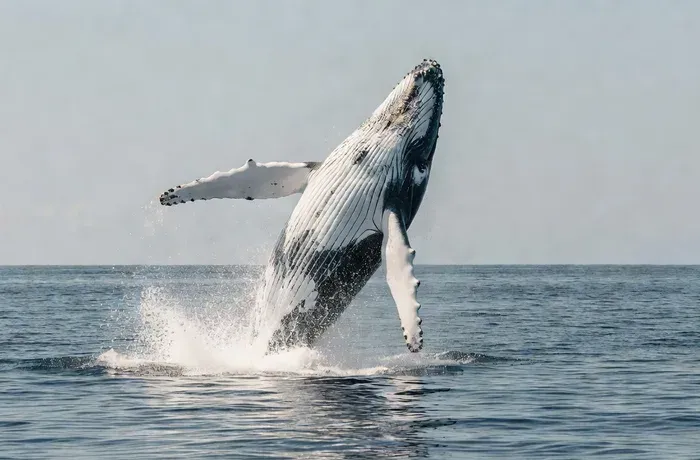
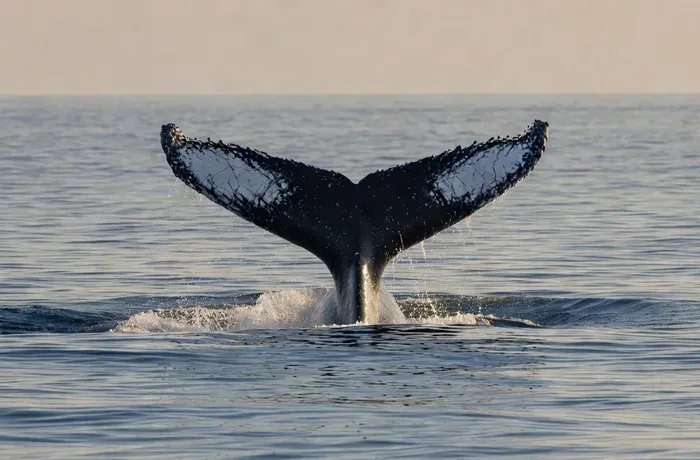
During January to March, humpback whales are present in the Kerama Island waters as part of their southern migration. Boat captains and guides watch for whale activity during the crossing and in the bays. When humpbacks are spotted, the boat slows and observes from a regulation distance. Surface activity is common in Kerama waters: breaching and pec slapping are frequent. If your visit falls in January–March, a sighting is likely.
Kerama Islands snorkeling
The Kerama Islands (Keramashoto National Park) have some of the clearest water in Asia. Kerama Blue is the local term for the distinctive cobalt-turquoise colour. Snorkeling spots are in sheltered bays with live coral at 2–8 metre depth. Sea turtles are extremely common, encountered on most trips. The coral is densely populated with tropical fish: butterflyfish, parrotfish, angelfish, Moorish idol, and Nemo-clownfish in their anemones.
Whale shark encounter at Yomitan (separate tour)
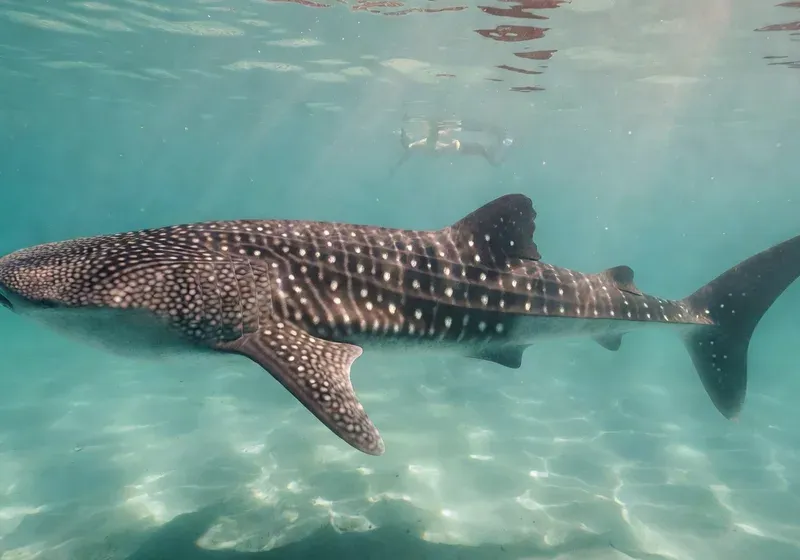
The <a href="#tour-2">two</a> <a href="#tour-4">whale shark tours</a> depart from the Yomitan area on Okinawa's northwest coast, a separate location from the Kerama Islands. Whale sharks are encountered in specific locations where conditions concentrate them. These are docile filter feeders that pose no risk to swimmers: encounters involve swimming alongside or below the whale shark while it moves slowly through the water filtering plankton. Guides ensure safe distances and non-disruptive behaviour.
Watch: Humpback Whales in Okinawa
Whale Watching | Things to Do in Okinawa
What to Bring and What to Leave at Home
✓ Bring
- Swimwear and rash guard: reef protection and UV coverage on the water
- Waterproof bag for phone and camera: spray on boat transfers
- Sunscreen SPF 50+ (reef-safe): subtropical UV is intense
- Light jacket for early morning departures in winter (Jan–Mar)
- Underwater camera or housing: Kerama visibility makes photography excellent
✗ Leave at home
- Regular chemical sunscreen: Kerama is a national park. Reef-safe sunscreen only.
- Fins if you rent them from the operator (check inclusions first)
Where Tours Depart From
| Port / Area | Details |
|---|---|
| Naha Port (Tomari Futo), Okinawa | Tomari Port, Naha, Okinawa 900-0015, Japan. Main departure point for all Kerama Islands tours. 15-minute taxi from Naha Airport (OKA) or 20 minutes by monorail to Miebashi station then short walk. Naha is the capital of Okinawa Prefecture with extensive hotel and guesthouse accommodation. |
| Yomitan area, Okinawa main island | Yomitan Village, Nakagami District, Okinawa. Northwest coast of Okinawa main island, approximately 30 km from Naha city centre. Departure details confirmed at booking. Most visitors rent a car for Yomitan: public bus connections from Naha exist but are slow. |
How to Choose an Ethical Tour
What ethical operators do
- Use reef-safe sunscreen only. Kerama is a national park with strict reef protection
- Do not touch coral or stand on the reef: one touch kills decades of growth
- Maintain at least 3 metres from sea turtles, with no chasing or blocking their path
- For whale sharks: swim parallel, never above, and avoid shadowing or blocking their movement
Red flags to avoid
- Chemical sunscreen in Kerama waters is harmful to coral and prohibited in the national park
- Flash photography near humpback whales is disruptive during nursing/breeding season
- Touching whale sharks is never permitted on any responsible tour