Destinations Whale Species When to Go Travel Guides
Browse all tours →

44 destinations · Free cancellation

Monterey · California · Year-round

Whale Watching in Monterey Bay, California

Monterey Bay offers some of the most productive whale watching in North America, year-round. The Monterey Submarine Canyon channels cold, nutrient-rich water to the surface, sustaining five whale species in a single location — including blue whales and humpbacks in summer, and gray whales on their famous winter migration. Few places on Earth deliver this kind of diversity on a half-day tour.

Year-round 3–4 hours From $62 Blue · Humpback · Gray · Orca

Check Availability

4+ tours available
From $62 per person
Year-round season
4.8★ top-rated tour
5 species regularly seen

Whale Watching Tours in Monterey

Monterey Bay: Whale Watching Tour whale watching MontereyTop Pickfrom $75

Monterey Bay: Whale Watching Tour

★★★★★4.8(2346 reviews)·2–3 hrs
  • Free cancellation up to 24 hours before
  • Certified naturalist commentary on board
  • Instant confirmation via email
Check Availability →
Monterey Bay Dolphin & Whale Watching Boat Tour whale watching Montereyfrom $62

Monterey Bay Dolphin & Whale Watching Boat Tour

★★★★★4.7(1832 reviews)·2–3 hrs
  • Free cancellation up to 24 hours before
  • Certified naturalist commentary on board
  • Instant confirmation via email
Check Availability →
Monterey: Whale Watching Tour with Marine Guide whale watching Montereyfrom $70

Monterey: Whale Watching Tour with Marine Guide

★★★★★4.6(388 reviews)·2–3 hrs
  • Free cancellation up to 24 hours before
  • Certified naturalist commentary on board
  • Instant confirmation via email
Check Availability →
Whale Watching Monterey Bay semi-private max 6 pax whale watching Montereyfrom $205

Whale Watching Monterey Bay semi-private max 6 pax

★★★★★4.7(44 reviews)·2–3 hrs
  • Free cancellation up to 24 hours before
  • Certified naturalist commentary on board
  • Instant confirmation via email
Check Availability →

How Much Does Monterey Whale Watching Cost?

Monterey whale watching tours start from $62 per person, with options from shared boat cruises to intimate semi-private experiences. Whether you're looking for an affordable introduction to monterey whale watching tours or a premium small-group outing, there's a tour to match every budget.

Budget
$62–$70

Shared-boat cruises on the bay with expert naturalist commentary. Covers the main whale watching grounds with a chance to spot multiple species including dolphins.

Premium
From $205

A semi-private experience with a maximum of 6 passengers and a marine biologist guide. Maximum time per sighting, ideal photography conditions, and an intimate expert-led format unlike any shared-boat tour.

What affects the price?

Vessel type

Fast offshore boats and catamaran cruises are the most affordable options. Semi-private research vessels with a marine biologist cost significantly more due to the small group size and expert-led experience.

Group size

Shared departures keep costs low — most Monterey Bay boats carry 20–50 passengers. The semi-private tour caps at 6 people, which is reflected in its premium price.

Inclusions

All tours include a naturalist guide. The dolphin and whale combo tour adds dolphin spotting at no extra cost, making it excellent value for the Monterey Bay experience.

Bottom line: For the best combination of price and whale-spotting success, book the Monterey Bay: Whale Watching Tour at $75 — it's the top-rated option with over 2,300 reviews and consistently finds blue whales and humpbacks in season.

Which Monterey Whale Watching Tour Is Right for You?

Boat type Duration Group size Best for Rating From
Fast Offshore Boat 3–4 hours Large shared group Maximum whale-spotting range 4.7 $62 Check →
Catamaran 3 hours Large shared group Families and motion-sensitive guests 4.8 $75 Check →
Small Group Research Vessel 4–5 hours Max 6 passengers Photographers and serious wildlife watchers 4.7 $205 Check →
Aerial view of humpback whales and dolphins in Hawaiian waters on Maui whale watching tours

Whale Species & Best Months in Monterey

Species January–March April–June July–September October–December Likelihood
Humpback Whale Arriving Peak Common ~80%
Blue Whale Rare Peak Present ~50%
Gray Whale Peak Departing Arriving ~70%
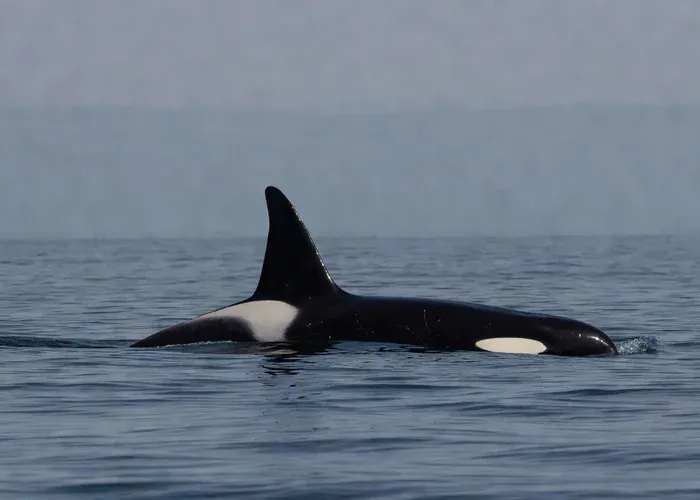
Orca Present Present Present Present ~30%
Risso's Dolphin Common Common Common Common Very High
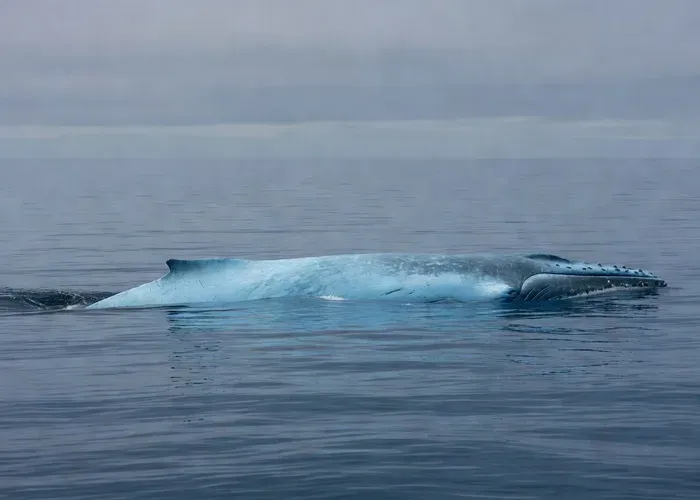
The Monterey Submarine Canyon — one of the deepest underwater canyons on the west coast — channels cold, krill-rich water to the surface year-round. This is why Monterey Bay sees <strong>more whale species more consistently than virtually anywhere else on the US Pacific coast</strong>. Blue whales, the largest animals to have ever lived on Earth, congregate here each summer specifically to feed on the dense krill upwellings.

What to Expect on the Day

1

Departure

Tours depart from Fisherman's Wharf, Monterey. Check in 30 minutes before departure. Naturalist briefs the group on cetacean biology, Monterey Bay ecology, and what to look for.

Try the clam chowder in a bread bowl before or after — Fisherman's Wharf is famous for it
2

Heading out

The boat heads across the bay toward the submarine canyon edge, where upwelling is strongest. Travel time to first whale area: 20–45 minutes depending on conditions.

Watch for sea otters and harbor seals near the wharf — commonly seen before leaving the bay
3

Blue whale search

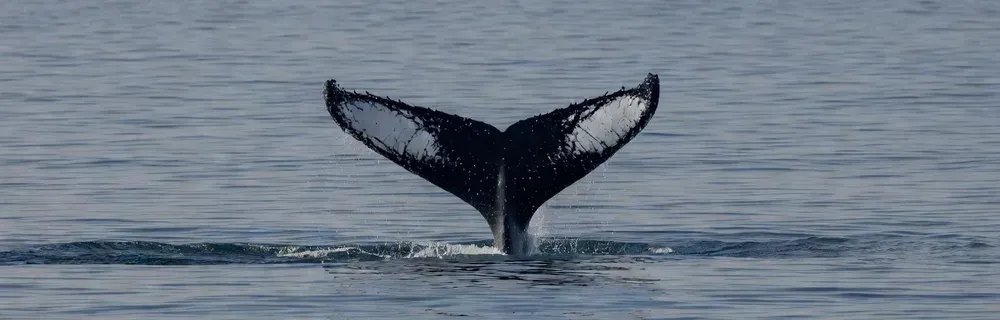
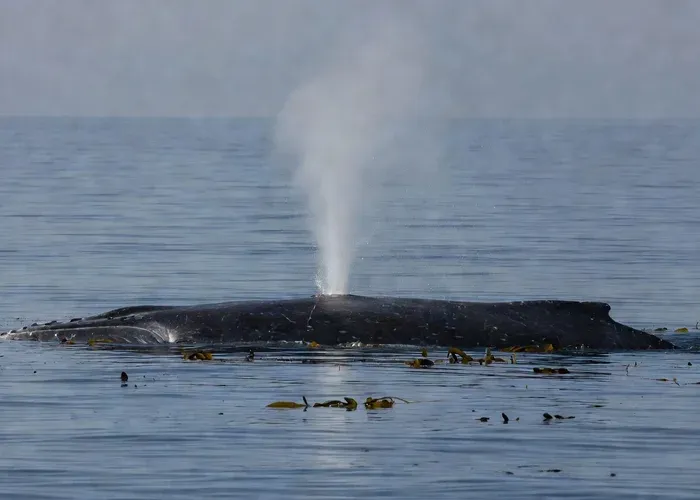
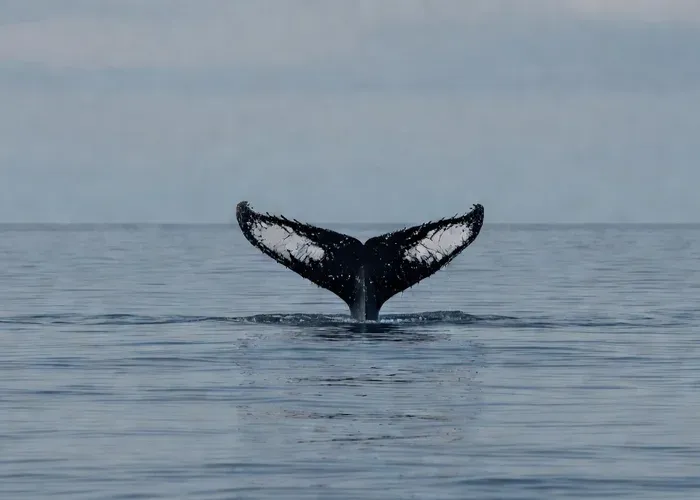
Blue whale feeding is surprisingly subtle — they surface every 10–20 minutes, blow high, then flukes on a deep dive. Naturalist reads ocean surface for krill reddening and watches for the distinctive 26-foot blow.

A blue whale's blow is straight and very tall — visible 1–2 km away on a calm day
4

Humpback encounter

Humpbacks are more active and dramatic — frequent breaches, pec-slapping and bubble-net feeding are regularly observed in the bay.

Bubble-net feeding (where humpbacks herd fish into a tight column using a spiral of bubbles) is one of the most extraordinary cetacean behaviours you can witness
5

Multiple sightings

A typical summer trip sees 3–8 individual whales across 2–4 species. When blue and humpback whales are feeding in the same krill patch, simultaneous sightings of different species are common.

Ask the naturalist to estimate whale size — blue whales look large even alongside the boat
6

Return

After 3–4 hours on the water, the boat returns to Fisherman's Wharf. Most operators post trip reports and photos online after each tour.

Check the operator's website for recent trip reports before booking to see what's active right now
No whale sighted? Most Monterey Bay operators offer a complimentary rebooking if no cetaceans are sighted — although Monterey Bay's productivity makes this very rare. Many also have a 95%+ success rate guarantee. Check the individual tour policy before booking.

Watch: Humpback Whales in Monterey

Epic Whale Watching Tour in Monterey Bay (Orcas!)

What to Bring — and What to Leave at Home

✓ Bring

  • Warm layers — Monterey Bay is cold even in summer (average 14–17°C year-round)
  • Windproof outer jacket
  • Sunglasses and reef-safe sunscreen
  • Camera with optical zoom (blue whales are massive but move fast)
  • Seasickness tablets
  • Light snack and water (tours are 3–4 hours)
  • Binoculars if you have them

✗ Leave at home

  • Light summer clothing — you will be cold on the water
  • Single-use plastic (many MBNMS operators prohibit it)
  • Drones (prohibited in Monterey Bay National Marine Sanctuary)
  • Large bags that won't fit in boat storage
Seasickness tip: Monterey Bay can have significant Pacific swell, especially in fall and winter. Take anti-seasickness medication 45–60 minutes before boarding. Sit in the middle of the boat and keep your eyes on the horizon. The research-style vessels (flatter hull) are generally more stable than traditional fishing-style boats.

Where Tours Depart From

Port / AreaDetailsBest for
Fisherman's Wharf, Monterey 3–4 tours All main operators depart from here
Santa Cruz Municipal Wharf 1 tour Semi-private small-group tours
Monterey is 2 hours south of San Francisco via Highway 1 or 101. Closest airport: Monterey Regional Airport (MRY) with direct flights from LA, San Francisco and LA. Fisherman's Wharf is walkable from most downtown hotels. Parking is available at the wharf ($1–3/hour).

How to Choose an Ethical Tour

What ethical operators do

  • Cut engine when alongside whales
  • Maintain minimum distance (usually 100m+)
  • Limit observation time per animal
  • Hold Blue Flag or WWSA certification
  • Carry a naturalist or marine biologist
  • Enforce no-feeding rules

Red flags to avoid

  • Race toward animals or chase pods
  • Allow multiple boats to surround a whale
  • Permit swimming with wild cetaceans
  • No certification or conservation messaging
  • No educational component on board
  • Unusually low price with no information

FAQ — Whale Watching in Monterey

What is the price of Monterey whale watching tours?

Monterey whale watching tours range from $62 to $205 per person. The most affordable option is the Monterey Bay Dolphin & Whale Watching Boat Tour at $62, which includes a shared-boat cruise with expert naturalist commentary and dolphin spotting. For the best value, the top-rated Monterey Bay: Whale Watching Tour at $75 has over 2,300 reviews and consistently finds blue whales and humpbacks. For a premium experience, the semi-private research vessel tour at $205 offers a marine biologist guide and maximum 6 passengers. All tours include free cancellation.

What whale species can you see in Monterey Bay?

Five species are regularly seen: Humpback whale (Apr–Dec), Blue whale (Jul–Oct), Gray whale (Dec–Apr migration), Orca (spring, unpredictable), Fin whale (year-round), and Minke whale. Monterey is one of the few places on Earth where blue, fin, and humpback whales are all commonly observed.

What is the best time for whale watching in Monterey?

July–October is the peak season for blue whales and humpbacks — both come to feed on the dense krill upwelling from the submarine canyon. December–April offers gray whale migration. Spring (April–June) sees returning humpbacks with high energy. Monterey offers something exceptional in every month of the year.

How likely am I to see a blue whale in Monterey?

In summer (July–October), blue whale sighting rates in Monterey Bay are approximately 50–70%, making it one of the most reliable places in the world to see the largest animal that has ever lived. The dense krill fields produced by submarine canyon upwelling are a reliable annual draw.

How long are whale watching tours in Monterey?

Most tours run 3 to 4 hours. Monterey Bay is large and offshore trips require more transit time than enclosed bays. Small-group research vessel tours sometimes run up to 5 hours.

Is Monterey whale watching suitable for children?

Yes, with the right vessel choice. Children 4+ are welcome on most boats. Choose the catamaran or a larger vessel for young children — more stable and better bathroom facilities. The fast offshore boats can be rough in swells. Bring warm clothes regardless of the weather forecast.

Why is Monterey Bay so good for whale watching?

The Monterey Submarine Canyon creates a year-round coastal upwelling that brings cold, nutrient-dense water to the surface. This drives an extraordinary food chain from krill to anchovies to sea lions to dolphins to whales. The canyon edge is only 2 miles from the wharf — unusual for having such deep productive water so close to shore.

What is the Monterey Bay National Marine Sanctuary?

The Monterey Bay National Marine Sanctuary (MBNMS) is the largest protected ocean area on the US Pacific coast — 6,094 square miles extending from San Francisco to Cambria. It protects the bay's exceptional marine biodiversity and places restrictions on commercial fishing, oil drilling and vessel speed near marine mammals.

Looking for more options? Browse whale watching tours worldwide — 44 destinations, all seasons.

Ready to book your Monterey whale watching tour?

4+ tours · from $62 · free cancellation · instant confirmation

See all tours →