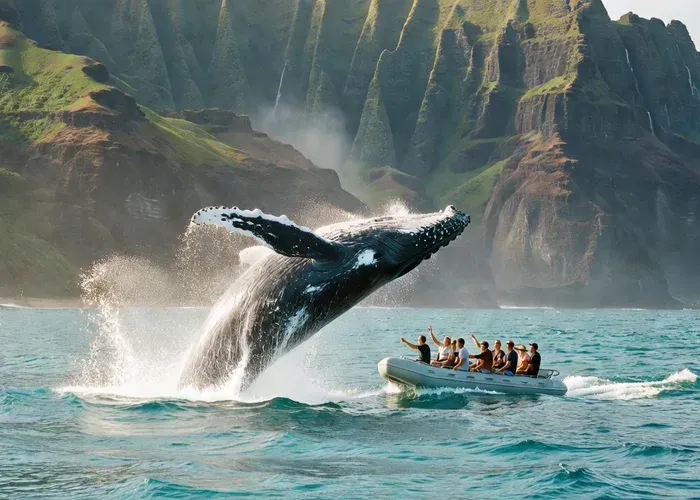
Which Kauai Whale Watching Tour Is Right for You?
| Tour | Duration | Group size | Best for | From |
|---|

Month-by-Month Guide
First humpbacks arrive in Kauai's offshore waters. Port Allen is particularly calm in December — ideal for the raft tour in good conditions. Off-peak pricing and the smallest tour groups of the season.
Whale activity builds along the southwest coast. Heat runs and competitive male groups become regular sightings. The Na Pali Coast framed against winter humpback activity is at its photographic peak.
Maximum humpback density. Calves are visible alongside mothers near the coast. Both tours run at near-full capacity — book 5–7 days in advance. The combination of breaching whales and Na Pali sea cliffs is extraordinary.
Calves are several weeks old and beginning to breach and wave pec fins. Mothers remain close to the coast. Still excellent sighting rates with slightly less crowded tours than February.
Late-season humpbacks begin their migration back to Alaska. Early April is reliably good; late April becomes hit-or-miss. Last chance to combine whale watching with Kauai's spring wildflower season on land.
Which Harbor Should You Depart From?
Port Allen Harbor
The primary departure point for all Kauai whale watching tours. Both the raft and catamaran depart from here. Port Allen's southwest location provides the calmest departure conditions on the island.
Whale Species & Best Months in Kauai
| Species | January–March | April–June | July–September | October–December | Likelihood |
|---|---|---|---|---|---|
| Humpback Whale | Peak | Departing | — | Arriving | ~85–90% |
| Spinner Dolphin | Common | Common | Common | Common | Year-round |
| Bottlenose Dolphin | Occasional | Occasional | Occasional | Occasional | ~25% |
What to Expect on the Day
Arrival at Port Allen
Check in at Port Allen Harbor, Hanapepe, 20–30 minutes before departure. Crew checks names, issues life jackets, and gives a dock-side orientation for raft vs catamaran passengers.
Port Allen has good free parking — but arrive early to get a spot close to the dockSafety briefing
Captain explains marine sanctuary rules — 100-yard whale distance, no drones, no swimming near cetaceans. Raft passengers get additional briefing on staying seated and handholds during active sections.
Raft passengers: secure all loose items, cameras, and phone in your bag or waterproof case before departingHeading toward Na Pali
The tour heads northwest along the southwest Kauai coast. The Na Pali sea cliffs begin appearing on the horizon within minutes. Whale grounds begin as soon as you clear the harbor mouth.
Watch the coastline as you go — sea caves and waterfalls are visible even before the whale action startsFirst sighting
Naturalist spots humpbacks from elevated position. Captain reduces speed and approaches to within the legal 100-yard limit. Na Pali cliffs in the background as the whale surfaces.
The combination of Na Pali sea cliffs and a breaching whale in the same frame is one of the best photos in all of HawaiiObservation
15–25 minutes with one animal or group. Raft passengers are at near water-level — the whale appears dramatically larger than from a catamaran deck. Naturalist identifies individual animals from fluke patterns if possible.
Burst mode: breaches happen fast and last under 2 seconds — keep your camera or phone ready and pointedSpinner dolphins
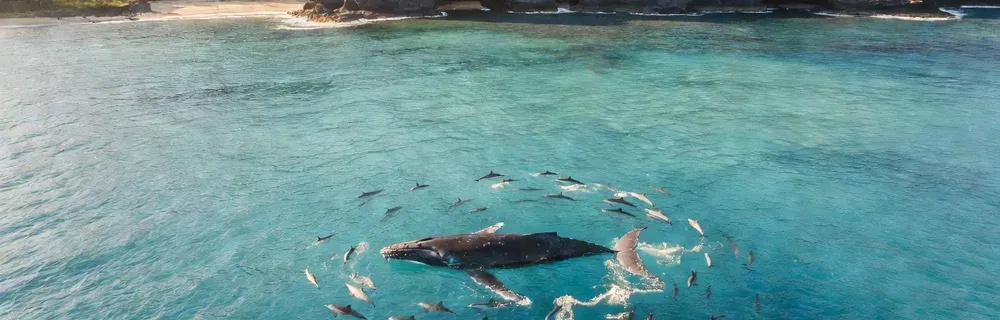
Most Kauai tours encounter spinner dolphin pods offshore. Pods of 30–100 animals are common. On the raft, dolphins often surface within touching distance of the bow — the crew keeps a respectful distance.
The catamaran's bow is an excellent dolphin-watching platform during transit between whale sightingsReturn to Port Allen
After 2–3 hours the boat returns with the Na Pali Coast as a parting backdrop. Cocktail catamaran passengers receive drinks on the return. Most operators offer a complimentary rebooking if no whale was sighted.
The late-afternoon cocktail tour catches the coast in golden light — spectacular for landscape photography on the returnHumpback Whale Behaviors to Watch For
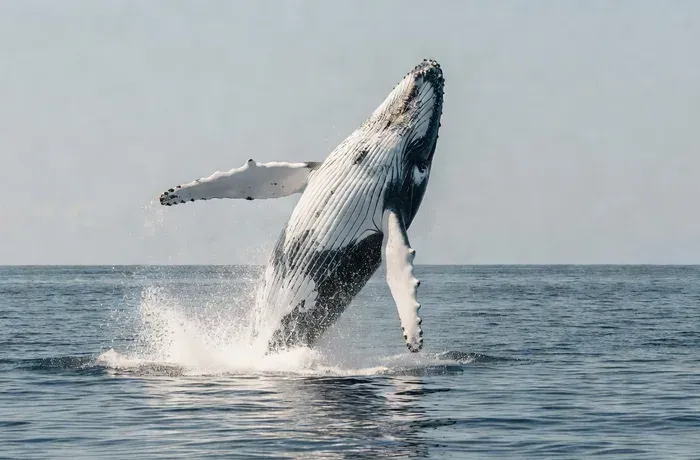
A 40-ton humpback launches completely clear of the water against the backdrop of Na Pali's sea cliffs. No whale watching experience in Hawaii matches this visual combination — the island's most dramatic wildlife moment.
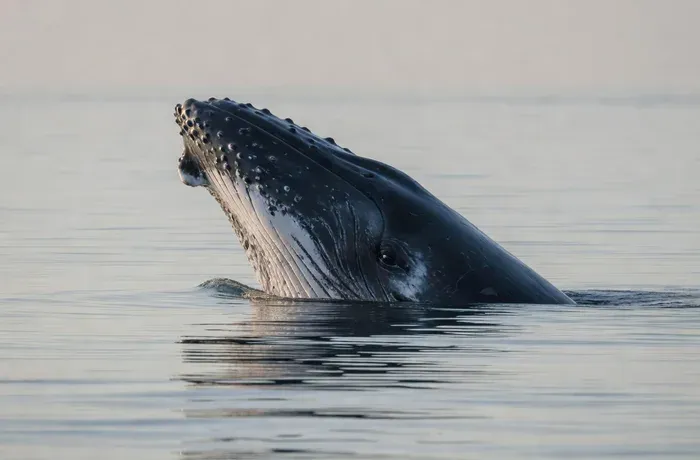
The whale rises vertically, holding its head above the surface. From a zodiac raft at water level, a spy-hopping humpback is an unforgettable close encounter — the whale's eye is clearly visible.
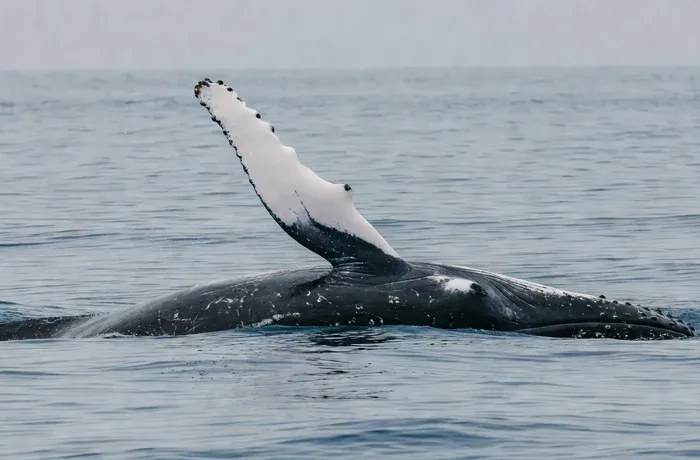
A 15-foot white pectoral fin slapped repeatedly on the surface — a social or communicative display. The crack carries across calm Port Allen waters and is often heard before the whale is seen.
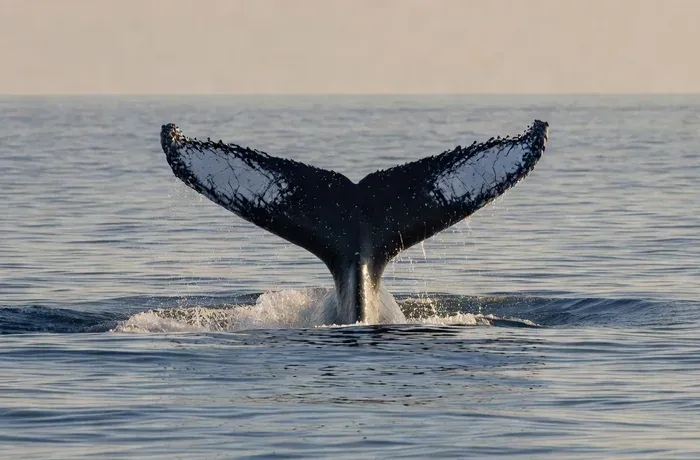
The classic tail-up dive — each humpback's fluke is unique, like a fingerprint. From a zodiac raft at sea level, a fluking humpback directly in front of Na Pali's cliffs is the quintessential Kauai whale watching image.
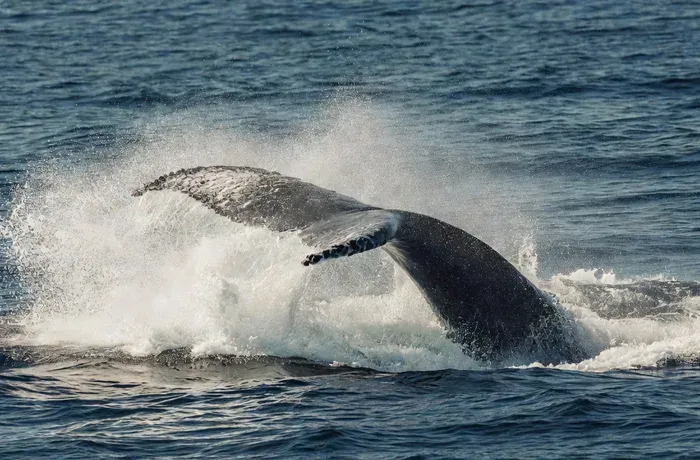
The tail stock raised sideways and slapped forcefully on the water in rapid repetition. Common during competitive male encounters in January and February as males challenge each other for position near females.
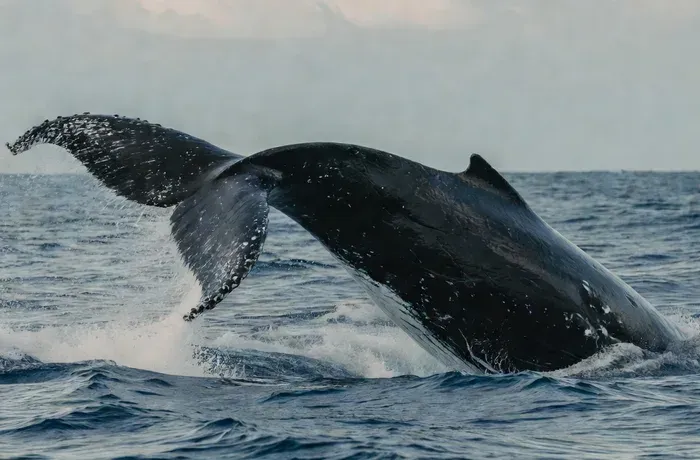
An aggressive competitive display — the whale arches its muscular tail stock out of the water and slams it sideways. Typically seen when escort males challenge each other near a female during peak heat-run season.
Watch: Humpback Whales in Kauai
Unforgettable Whale-Watching Adventure in Kauai | Kauai Sea Tours
What to Bring — and What to Leave at Home
✓ Bring
- Reef-safe sunscreen (required in Hawaii)
- Polarised sunglasses
- Light waterproof jacket (raft tours get spray)
- Camera in a waterproof case
- Refillable water bottle
- Seasickness tablets if you're prone
- Your booking confirmation
✗ Leave at home
- Chemical sunscreen (harmful to coral reefs)
- Valuables that can't get wet (raft tours especially)
- Single-use plastic bottles
- Drones — illegal within the Marine Sanctuary
- Large bags or backpacks
Where Tours Depart From
| Port / Area | Details | Best for |
|---|---|---|
| Port Allen Harbor | Both operators | All Kauai whale watching tours — primary departure point |
| Nawiliwili Harbor | Seasonal | Lihue hotel guests, closer to airport |
How to Choose an Ethical Tour
What ethical operators do
- Maintain minimum 100-yard approach distance (federal law)
- Reduce engine speed when alongside whales
- Passive approach — never chase or circle surfacing animals
- NOAA Watch Smart certified operators
- Naturalist on every departure
- No feeding, no swimming near whales or dolphins
Red flags to avoid
- Approach closer than 100 yards (federal violation)
- Rev engines aggressively near surfacing whales
- Circle around whales to prevent them from diving
- Allow swimming near cetaceans
- No naturalist or educational component on board