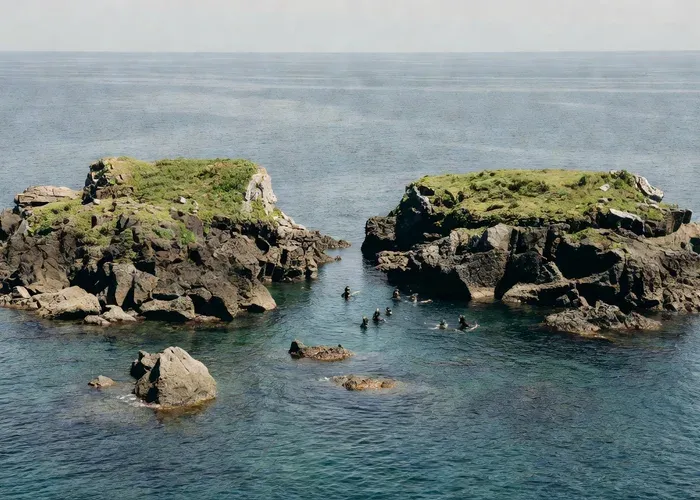
Which Azores Whale Watching Tour Is Right for You?
| Tour | Duration | Group size | Best for | Rating | From | |
|---|---|---|---|---|---|---|
| From Ponta Delgada: Whale and Dolphin Watching Trip | 3 hours | Shared group | São Miguel-based visitors, first-time Azores visitors | 4.6 | $78 | Check → |
| Terceira: Whale Watching + Swimming Dolphins + Ilhéus Cabras | Full day | Shared group | Visitors wanting the most complete Azores wildlife day | 4.7 | $254 | Check → |
| Watching Whales and Dolphins on Terceira Island | 3 hours | Up to 26 | Terceira visitors who want a guarantee with a refund option | 4.9 | $73 | Check → |
| Terceira Island: Whale & Dolphin Watching, Best Wildlife Tour | 2.5 hours | Up to 20 | Hydrophone-equipped trip from Angra do Heroísmo | 4.2 | $79 | Check → |
| Azores Whale Watching Tour: Ponta Delgada | 2-3 hours | Up to 75 | First-time visitors wanting a proven São Miguel operator | 4.5 | $73 | Check → |
| São Miguel: Whales, Dolphins & Lagoa do Fogo Volcano, Full Day with Lunch | 7 hrs | Up to 24 | Whales in the morning, a volcano crater lake in the afternoon | 4.4 | $181 | Check → |
| São Miguel, Azores: Whale and Dolphin Watching Tour | 3-4 hours | Up to 75 | Lowest price, catamaran with a bathroom | 4.8 | $67 | Check → |
| Whale and Dolphin Watching Tour on Pico Island | 3 hours | Up to 30 | Travellers staying on Pico or Faial | 4.7 | $79 | Check → |
| Terceira Island: Whale Watching + Ilhéus das Cabras | 4.5 hours | Up to 20 | Whale watching plus a swim stop at Ilhéus das Cabras | New | $113 | Check → |
| Terceira Island: Private Whale & Dolphin Watching (up to 12) | 2.5 hours | Private group | Families, small groups, or special occasions wanting an exclusive charter | 5 | $1,016/group | Check → |
How much does whale watching in the Azores cost?
A standard 2.5-3 hour whale watching trip in the Azores costs $67-$79 per person on the listings below, and about €70-€79 when you book an operator direct. Futurismo charges €70 plus a €4.20 online fee in Ponta Delgada, with children 6-12 at half price and under-5s free. CW Azores on Pico charges €79 for adults and €50 for children up to 12.
Prices rise when the trip adds something: a swim stop, a full day with lunch or a private boat. Drinks and hotel pickup are not included on most standard trips.
Every tour on this page by island, length and price per person, from the live listings, cheapest first within each island.
| Tour | Island and port | Length | From | Rating |
|---|---|---|---|---|
| São Miguel catamaran (OceanEye) | São Miguel, Vila Franca do Campo | 3-4 h | $67 | 4.8★ (39) |
| Ponta Delgada half day (Picos de Aventura) | São Miguel, Ponta Delgada | 2-3 h | $73 | 4.5★ (962) |
| From Ponta Delgada: Whale and Dolphin Watching | São Miguel, Ponta Delgada | 3 h | $78 | 4.6★ (5,427) |
| Whales, dolphins and Lagoa do Fogo, with lunch | São Miguel, Ponta Delgada | 7 h | $181 | 4.4★ (28) |
| Cetacean Watching on Terceira (Water4fun) | Terceira, Angra do Heroísmo | 3 h | $73 | 4.9★ (201) |
| Terceira Wildlife Tour (OceanEmotion) | Terceira, Angra do Heroísmo | 2.5 h | $79 | 4.2★ (31) |
| Whale watching + Ilhéus das Cabras | Terceira, Angra do Heroísmo | 4.5 h | $113 | New |
| Whales + dolphin swim + Ilhéus das Cabras | Terceira, Angra do Heroísmo | Full day | $254 | 4.7★ |
| Private boat, up to 12 | Terceira, Angra do Heroísmo | 2.5 h | $1,016/group | 5.0★ (4) |
| Pico whale and dolphin trip | Pico, Lajes do Pico | 3 h | $79 | 4.7★ (22) |
When can you see sperm whales in the Azores?
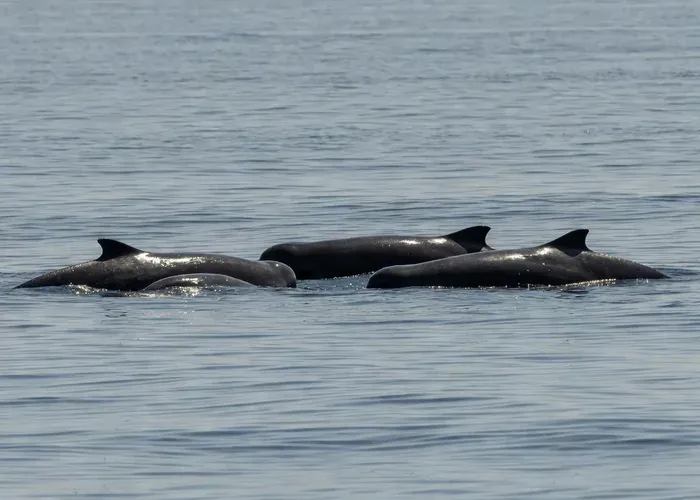
You can see sperm whales in the Azores in every month of the year. Family groups of around 12 females, juveniles and calves live around the islands, and they are seen most often in the warmer summer months. Adult males, up to 18 metres long, roam from the Arctic to the Antarctic and visit the islands from time to time.
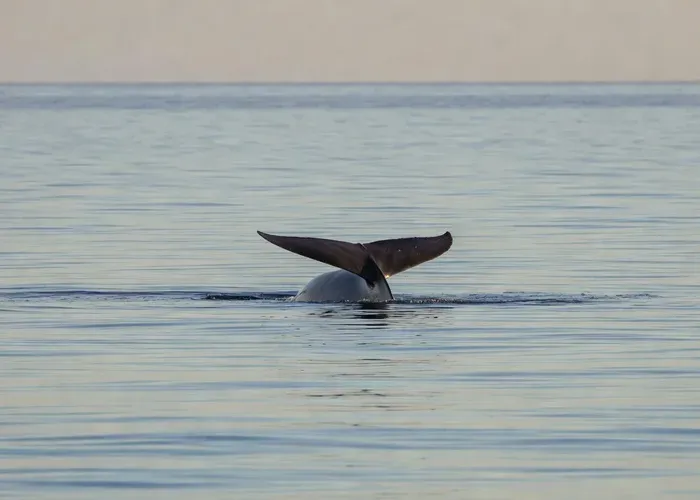
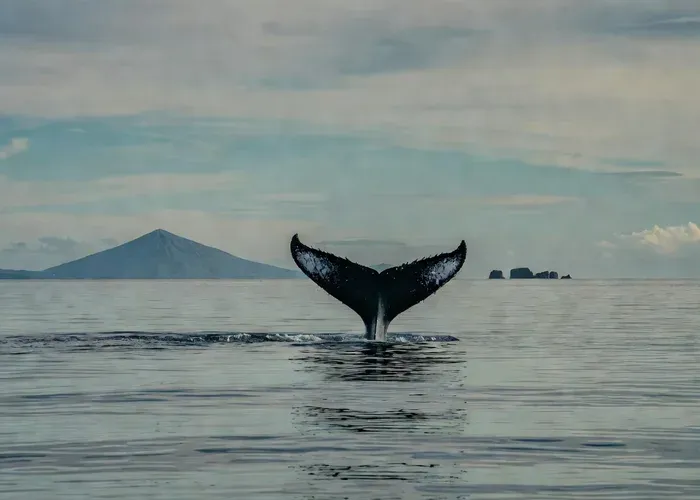
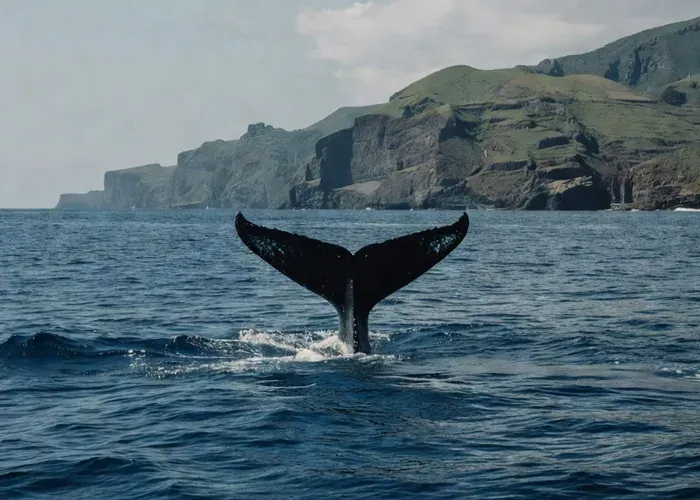
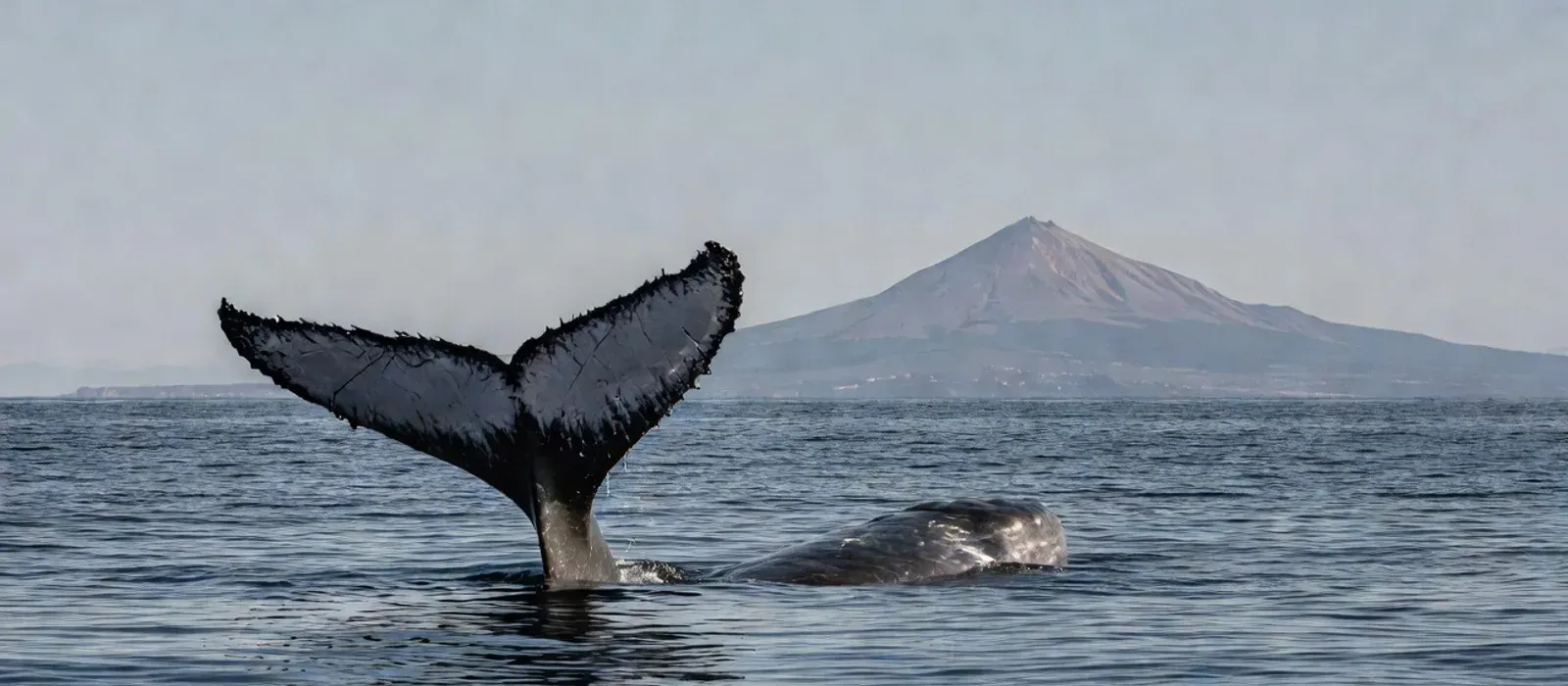
Females reach about 12 metres and calves are born at 4-5 metres. Sperm whales may be the deepest divers on earth, possibly beyond 3,000 metres, so a boat waits at the surface while the whale feeds and watches for the blow when it comes back up. The tail rising before each dive is the moment most people come for.
Every standard trip on this page targets sperm whales. For the most time with them, pick a 3-hour trip over a 2-hour one: the Ponta Delgada trip or Cetacean Watching on Terceira.
Which month is best for whale watching in the Azores?
April and May are the best months for whale watching in the Azores, because blue, fin and sei whales pass the islands on top of the resident sperm whales and dolphins. The baleen whale window runs from March to May, with some sightings into June.
- March-May: blue, fin and sei whales on migration, sperm whales, common and Risso's dolphins. Best for variety, cooler and windier.
- June-September: calmest sea, warmest air, sperm whales and dolphins every day. Best for families and anyone prone to seasickness.
- October-November: sperm whales and dolphins, fewer boats, more cancelled days.
- December-February: the time not to plan a whale-focused trip. Atlantic storms cancel more departures, and blue whales are rarely seen.
Morning and afternoon trips see whales equally often, so pick the slot that suits your day. Book the trip early in your stay, never on your last day before a flight, so a weather cancellation can move to another day.
Source: Azores.com.
Which island in the Azores is best for whale watching?
São Miguel is the best island for most first visits, because it has the most flights, the most boats and the cheapest trips. Pico suits travellers who want the whaling history and deep water close to shore, and Terceira suits those who want a dolphin swim or a private boat.
The three islands with tours on this page, compared on what decides the choice.
| Island | Port | From | Best for |
|---|---|---|---|
| São Miguel | Ponta Delgada, Vila Franca do Campo | $67 | First visit, most departures, full-day combo with Lagoa do Fogo |
| Terceira | Angra do Heroísmo | $73 | Dolphin swim, Ilhéus das Cabras, private boat |
| Pico | Lajes do Pico | $79 | Whaling history, Pico volcano backdrop, pairs with Faial |
Faial (Horta) also has whale watching operators and sits 30 minutes by ferry from Pico, so a central-islands trip can cover both.
Source: Azores.com.
How likely are you to see whales in the Azores?
Your chance of seeing whales or dolphins on an Azores trip is about 98%, the figure Futurismo reports for its São Miguel boats. Sightings are still not guaranteed, because weather and the animals decide. What a guarantee gives you differs by tour, and it matters if you only have one day.
What each listing promises if the boat sees no whales or dolphins, from the tour descriptions.
| Tour | If nothing is seen |
|---|---|
| Ponta Delgada half day (Picos de Aventura) | Full refund |
| Cetacean Watching on Terceira | Full refund or a second trip, your choice |
| São Miguel catamaran (OceanEye) | A new trip |
| Terceira Wildlife Tour | Sighting guarantee included |
Source: Futurismo, Azores.com.
Is the Azores or Madeira better for whale watching?
The Azores are better for sperm whales and for a whole trip built around whales, and Madeira is better if you want a cheaper, shorter boat ride from a city base. Both islands have sperm whales all year and blue and fin whales in spring.
- Azores: standard trips $67-$79, sperm whales as the main species, three islands with tours, vigia lookouts on every island.
- Madeira: trips from $40 out of Funchal, Calheta and Machico, with short-finned pilot whales and bottlenose dolphins year-round and sperm whales a little less often.
- Getting there: both have direct flights from Lisbon and several other European cities.
Compare every Madeira trip on our Madeira whale watching tours page.
Source: Azores.com, Madeira whale watching tours.
What are the whale watching rules in the Azores?
Boats in the Azores must stay at least 50 metres from whales and dolphins, and at least 100 metres from a whale with a small calf. These rules keep the animals relaxed, which is also why sightings stay long.
- Boats stay beyond 500 metres when animals are resting, motionless or giving birth.
- No more than three boats may be within 500 metres of the same whale or group.
- A boat may stay within 500 metres for no more than 15 minutes.
- Swimming with whales is prohibited. Dolphin swims are allowed with licensed operators, with only a couple of swimmers in the water at once.
Source: Azores.com, CW Azores.
Whale Species & Best Months in Azores
| Species | January–March | April–June | July–September | October–December | Likelihood |
|---|---|---|---|---|---|
| Sperm Whale | Resident | Resident | Resident | Resident | Very High year-round |
| Blue Whale | — | Migration | Occasional | — | April–June |
| Humpback Whale | Occasional | Migration | Occasional | Occasional | April–June peak |
| Fin Whale | Occasional | Migration | Occasional | Occasional | Spring migration |
| Short-finned Pilot Whale | Common | Common | Common | Common | Year-round |
| Common Dolphin | Common | Common | Common | Common | Year-round |
| Risso's Dolphin | Occasional | Common | Common | Occasional | Spring–Summer |
What to Expect on the Day
Departure and vigia check-in
At the marina, the captain or naturalist briefs the group and makes contact with the vigia, the clifftop lookout teams scanning the ocean from high points around the island. Vigia teams use binoculars and radio to locate cetaceans before boats leave harbour. This means most Azores whale watching trips head directly to known cetacean locations rather than searching open water, dramatically reducing time to first sighting.
Sperm whale at the surface
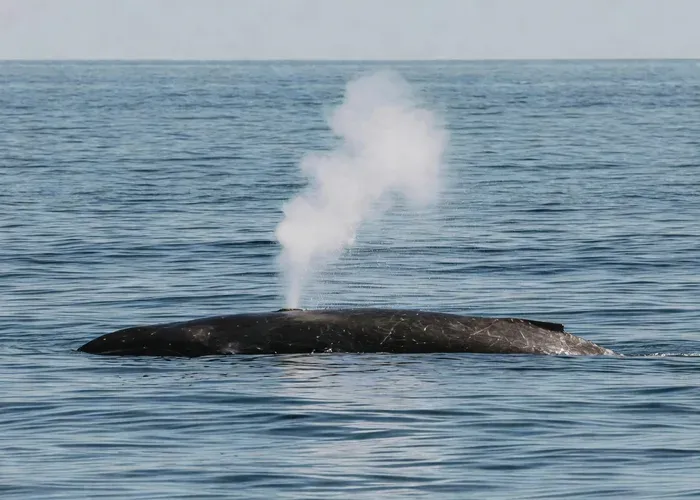
Sperm whales spend 8–15 minutes at the surface after a deep dive, recovering before the next descent. The boat approaches slowly and stays at least 50 metres away, or 100 metres if a calf is present, as Azorean rules require. Sperm whales at the surface breathe slowly and regularly, each breath produces the distinctive forward-angled blow. When the whale arches its back to begin a dive, the enormous broad flukes rise clear of the water in a sequence that takes 20–30 seconds to complete.
Deep dive and surface interval
Sperm whales dive to 1,000 metres or more to hunt giant squid. A typical dive lasts 40–60 minutes. The naturalist on board will explain what is known about sperm whale behaviour, biology, and individual identification during the wait. Vigia coordination often means a second or third sperm whale surfaces while the first is still diving, so tours often encounter multiple individuals.
Dolphins and additional species
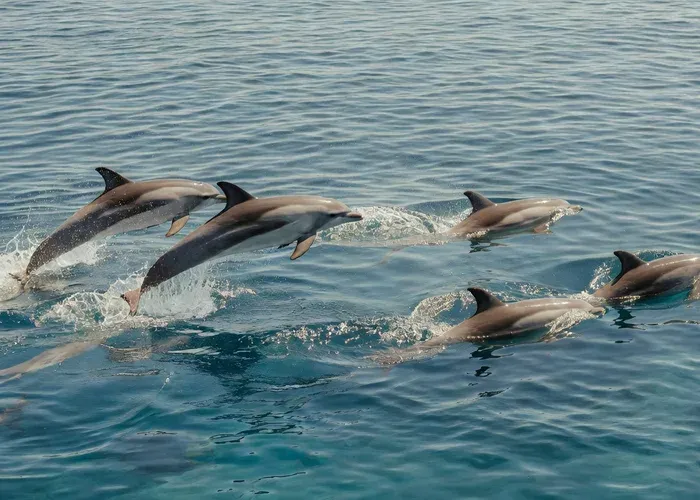
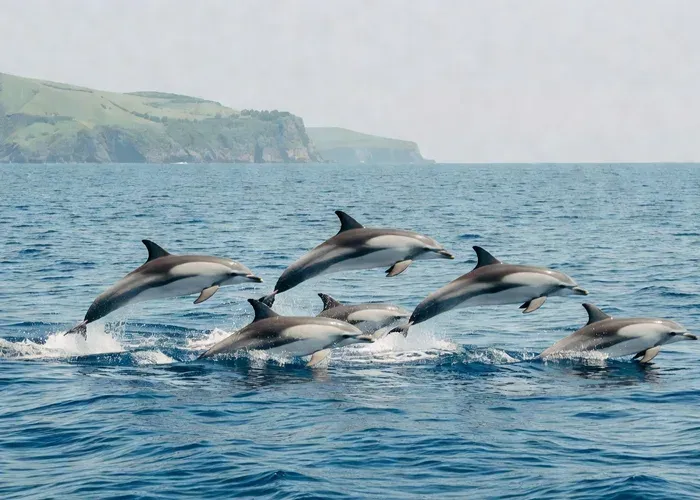
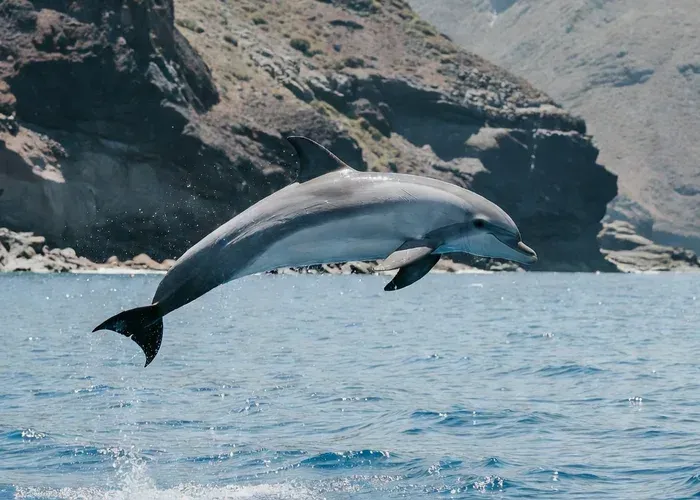
Common dolphins, bottlenose dolphins, and Risso's dolphins are regularly encountered. Common dolphins often approach boats and bow-ride for extended periods. In April, May, and June, blue whale sightings are possible, the largest animals on earth, whose blow can reach 9 metres. When the vigia report a blue whale, the boat may detour for one of the rarest sightings available to any whale watching passenger anywhere in the world.
Return to harbour
Most 3-hour Azores tours return with 2-4 cetacean species seen. The guide usually sums up what you saw and how the animals are protected. São Miguel tours return to Ponta Delgada or Vila Franca do Campo, Terceira tours to Angra do Heroísmo marina, and the Pico trip on this page to Lajes do Pico.
Watch: Humpback Whales in Azores
The Best Whale Watching Tour of the Azores
What to Bring and What to Leave at Home
✓ Bring
- Windproof and waterproof outer layer, Atlantic Ocean conditions vary quickly
- Sunscreen and sunglasses
- Camera with zoom lens for sperm whale dives
- Sea sickness medication if prone, mid-Atlantic swell can be present outside the bays
- Swimwear if taking the dolphin swim option on Terceira
✗ Leave at home
- Overpacking, boats have limited storage space
- Pets
Where Tours Depart From
| Port / Area | Details |
|---|---|
| Marina de Ponta Delgada, São Miguel | Avenida João Bosco Mota Amaral, 9500-772 Ponta Delgada. Main harbour on São Miguel, the largest and most visited island. João Paulo II Airport (PDL) is 3 km west of the city centre. The Ponta Delgada trips and the full-day Lagoa do Fogo tour start here. The cheapest São Miguel catamaran leaves from Vila Franca do Campo marina instead, 25 km east. |
| Angra do Heroísmo, Terceira | Marina de Angra do Heroísmo, 9700 Angra do Heroísmo. Capital of Terceira and a UNESCO World Heritage city. Lajes Airport (TER) connects to Lisbon and Porto. All Terceira tours on this page, including the private boat and the Ilhéus das Cabras trips, depart from this marina. The historic centre is a short walk from the quay. |
| Lajes do Pico, Pico Island | Marginal avenue, Lajes do Pico. The old whaling village on Pico's south coast, where shore whaling ended in 1987. The Pico trip on this page meets at the operator's shop on the seafront 30 minutes before departure. Pico Airport (PIX) has flights from Lisbon and São Miguel, and the ferry from Horta on Faial to Madalena takes about 30 minutes. |
How to Choose an Ethical Tour
What ethical operators do
- Boats stay at least 50 metres from cetaceans, 100 metres if a calf is present (Azorean rules)
- Choose operators using vigia lookouts: less time searching, less fuel
- On dolphin swims, float quietly and never chase the animals
- Choose a catamaran with small children: CW Azores takes no children under 3 on its boats
Red flags to avoid
- Swimming with whales, which is prohibited in Azorean waters
- More than three boats within 500 metres of the same whale
- Touching or feeding any cetacean